By Gail Smith
On Vilakazi Street in Soweto, where tourists queue to visit the former home of Nelson and Winnie Madikizela-Mandela, and where the story of South Africa’s liberation is woven into the bricks and pavements, an uncomfortable contradiction sits in plain sight.
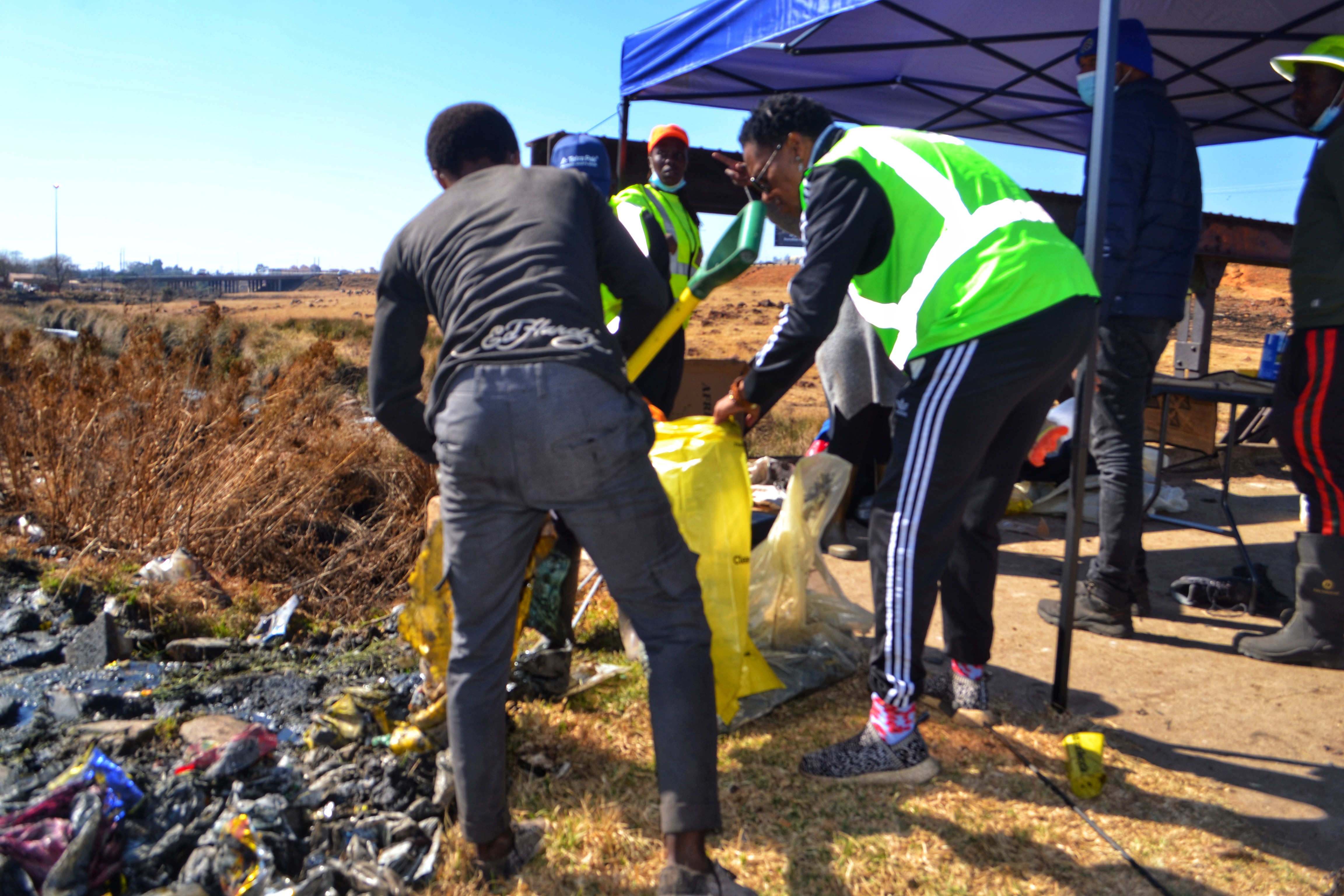
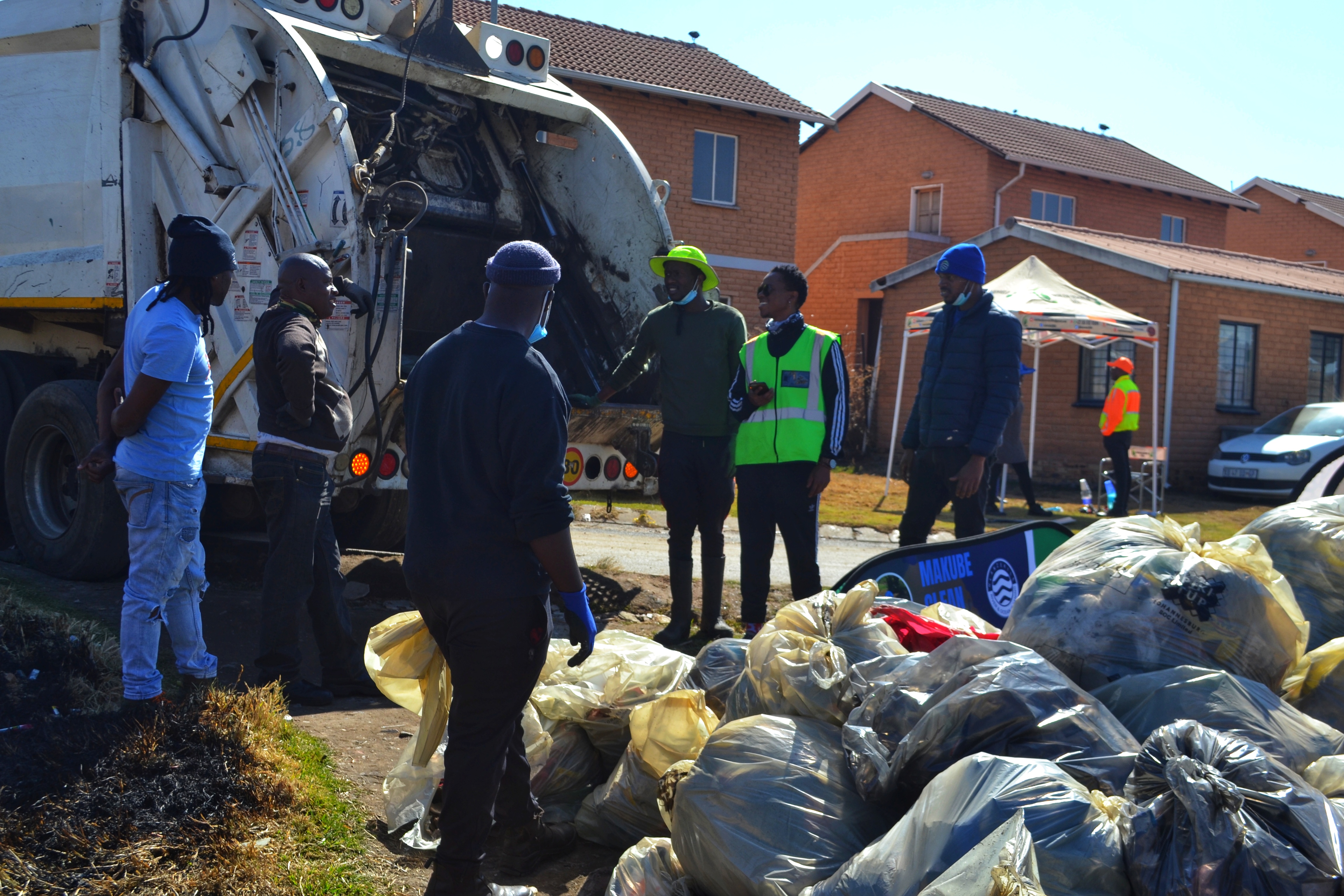
Just steps from one of the country’s most visited heritage sites, illegal dumping persists. Community clean-up campaigns arrive. Volunteers fill bags with waste. Photographs are taken. And then, days later, the rubbish returns.
Centred on Orlando West, Ward 39 includes Phefeni, Mzimhlophe and the Ezimbuzini informal settlement. It is home to some of South Africa’s most famous liberation landmarks, including Vilakazi Street, the only street in the world to have housed two Nobel Peace Prize laureates: President Nelson Mandela and Archbishop Desmond Tutu.
The modest matchbox house at 8115 Vilakazi Street, where Winnie Madikizela-Mandela lived for 40 years, operates as a museum displaying family memorabilia and historical exhibits. Nearby, the Hector Pieterson Memorial and Museum honours the youth who lost their lives during the 1976 Soweto Uprising.
Yet the opportunities of Ward 39 are matched by its challenges. Electricity supply to the overcrowded Ezimbuzini informal settlement has been disrupted for years, there are not enough toilets, and crime remains endemic.
Tourists flock to historical landmarks, yet many visitors leave before nightfall, deterred by perceptions of crime, neglected public spaces and inadequate infrastructure.
An ambitious plan
But now, a quiet experiment is taking shape, one that begins with a simple proposition: what if residents, businesses, traders and informal settlements could organise themselves to solve the problems they live with every day?
Mbali Zulu, community activist and strategist, is one of the architects behind what could become one of the most significant community-led governance experiments in South Africa’s townships: the Soweto Community Improvement District, or SCID.
The idea borrows from a model long associated with affluent urban areas. Gauteng has nearly 60 CIDs. These include the Braamfontein Improvement District that focuses on safety and cleanliness around Braamfontein's student and business hubs, the Newtown Improvement District that manages public spaces and security in the cultural and creative precinct, and the Greater Maboneng Improvement District that supports the vibrant arts, residential, and retail community.
Although their structures vary across municipalities, they generally follow the same model: a designated area is established, property owners collaborate, and a formal entity manages operations funded through levies.
But Soweto’s version aims to do something different.
“Traditionally, CID is defined as the city improvement districts,” Zulu explained. “But we've changed our ‘c’ to community improvement district.”
That single word change reflects an ambitious shift in thinking.
As Zulu explains, many community groups are doing valuable work but struggle to access funding, technical expertise, networks or institutional support. At the same time, corporations, donors and social investors often want to help but do not know which local organisations they can trust.
Jozi My Jozi: the Super Connector
Bridging this gap between communities, investors and expertise is Jozi My Jozi, a civic movement that Zulu calls a “super connector”, linking residents, businesses, funders, institutions and grassroots organisations.
Rather than running projects directly, it identifies credible grassroots efforts, connects them with funders, experts, businesses, government stakeholders and partner organisations, and helps build the relationships that make long-term structural change possible.
Jozi My Jozi’s role is not to dictate answers, says Zulu, but to create the connections that allow communities to find them.
Its priorities are simple: cleaner environments, safer neighbourhoods and stronger social support systems.
The hidden complexity of waste
In preparation for the SCID, Zulu, the Soweto Rotary Community Corps and other community-based partner organisations conducted extensive door-to-door research with residents. What they uncovered was a complex web of behavioural, economic and structural factors.
One of the most striking insights from the research is that illegal dumping is not simply a sanitation issue.
“You cannot look at these issues in isolation,” Zulu argues.
“A dumping site is not just a waste problem. It is a public health problem, an economic problem, a security problem and, ultimately, a community problem.”
Some residents miss weekly refuse collection and resort to dumping waste in nearby open spaces. Informal contractors collect construction rubble but dump it elsewhere to avoid disposal fees. Residents from outside Ward 39 also discard waste in open fields, while nearby informal settlements often lack adequate waste infrastructure.
Three Pillars: cleanliness, safety and social support
The Soweto CID is built around three interconnected priorities.
“The number one thing is cleaning,” Zulu said. “Cleaning services and environmental development.”
The second is safety and security. Community policing efforts already exist, but organisers argue they often lack transparency, sustainable funding and coordination.
The third pillar addresses social challenges, particularly substance abuse and youth unemployment.
“When you look at the data, who are the petty crime people that create all this trouble? It's loiterers. Why? They are not employed,” Zulu said.
Rather than creating new organisations from scratch, the SCID intends to bring existing community groups together under a common mission.
Beyond the suburban model
In Johannesburg’s business districts and wealthier suburbs, improvement districts typically operate through additional property levies that fund security patrols, cleaning crews and urban management services.
But Soweto presents a different reality. The township contains thriving businesses, tourist attractions, informal traders, schools, faith institutions and residential communities. It also faces persistent challenges associated with unemployment, drug abuse, illegal dumping, infrastructure decline and crime.
Zulu argues that simply importing the suburban model would fail.
The proposed SCID therefore seeks to create a community-governed structure that combines resident contributions, business participation, corporate social investment, philanthropic support and municipal partnerships.
Unlocking Soweto’s potential
Understanding the urgency of the project requires understanding Soweto itself, says Zulu, who grew up in the township and speaks passionately about its potential.
“There is a real demand to come to Soweto,” he said, pointing to growing tourism, cultural attractions and global interest in the area.
But potential alone is not enough.
Understanding the urgency of the project requires understanding Soweto itself, says Zulu, who grew up in the township and speaks passionately about its potential.
“There is a real demand to come to Soweto,” he said, pointing to growing tourism, cultural attractions and global interest in the area.
But potential alone is not enough.
“Tourists are still scared,” Zulu said. “They come through during the day. There's a night economy that can be exploited. They don't sleep over. So there's a hospitality economy that can be accelerated.”
Imagine, suggests Zulu, Soweto as a 24-hour destination: visitors staying in local guesthouses, restaurants operating into the evening and cultural experiences extending beyond daytime tours.
For Zulu and Jozi My Jozi, success of the Soweto CID would mean unlocking Soweto’s economic potential, expanding tourism, creating jobs and strengthening civic participation.
The vision is expansive, but its foundation is local: listening to residents, supporting grassroots leaders and building partnerships strong enough to outlast political cycles.
Jozi My Jozi is betting on connection as a form of power. In Ward 39, Mbali Zulu believes that power, if properly organised, can transform not only this section of Soweto, but also the story Soweto tells about itself. The success of the Soweto CID, they believe, can potentially create a ripple effect into neighbouring wards and communities.
 Johannesburg


 Warning: text comes here